Dubai Robotics and Automation Programme: what businesses should know
What the Dubai Robotics and Automation Programme is, what it targets to 2032, and what it means in practice for businesses planning a robot pilot.

The Dubai Robotics and Automation Programme is a ten-year government plan, launched on 21 September 2022 and led by the Dubai Future Foundation. It aims to raise the sector's contribution to 9% of Dubai's GDP, put 200,000 robots to work by 2032 and place Dubai among the top 10 cities in the world for robotics and automation. For businesses it signals policy support for adoption, but it is a framework rather than a grant scheme, so each company still needs its own business case and pilot.
What is the Dubai Robotics and Automation Programme?
The programme was announced by Sheikh Hamdan bin Mohammed, Crown Prince of Dubai, during a visit to Dubai Future Labs. According to the Dubai Media Office announcement, its purpose is to boost the development, testing and adoption of robotics and automation in key economic sectors.
The UAE government portal describes the same targets, and The National covered the launch as part of Dubai's wider push to build a future economy.
The headline numbers are worth keeping in view:
- A 9% contribution to Dubai's GDP from the robotics and automation sector within ten years.
- 200,000 robots deployed over the same period, to improve efficiency and productivity in services, logistics and industry.
- A place among the world's top 10 cities for robotics and automation.
These are government targets. They are not forecasts we can verify, and they are not commitments to any single company.
How is the programme organised?
The programme rests on three pillars: governance, support for research and development, and adoption and use of the technologies. A Dubai Council for Robotics and Automation oversees the initiatives, with members from the public sector, the private sector and academia.
The published plan lists five initiatives:
- A robotics and automation council to coordinate the effort.
- Legislation and regulation for robotics use.
- Experimental labs where technology can be tested.
- An academic excellence programme for skills and research.
- A programme to help companies adopt robotics and automation.
It also names five focus sectors: production and manufacturing, consumer services and tourism, healthcare, connected mobility and logistics, and extreme environments. Sheikh Hamdan also called on government entities and the private sector to work with research and academic institutions to build a supportive regulatory and legal environment, as reported by Arabian Business.
Which businesses are most affected?
The focus sectors map closely to the venues we work with in the UAE. The table below shows where each sector typically meets robots today. It describes common use cases, not programme requirements.
| Programme focus area | Typical business | Common robot use today |
|---|---|---|
| Consumer services and tourism | Hotels, restaurants, malls | Delivery, reception, floor cleaning |
| Healthcare | Hospitals, clinics | Internal delivery, cleaning, reception |
| Connected mobility and logistics | Warehouses, facilities | Material transport, site inspection |
| Production and manufacturing | Factories, industrial sites | Material handling, floor care |
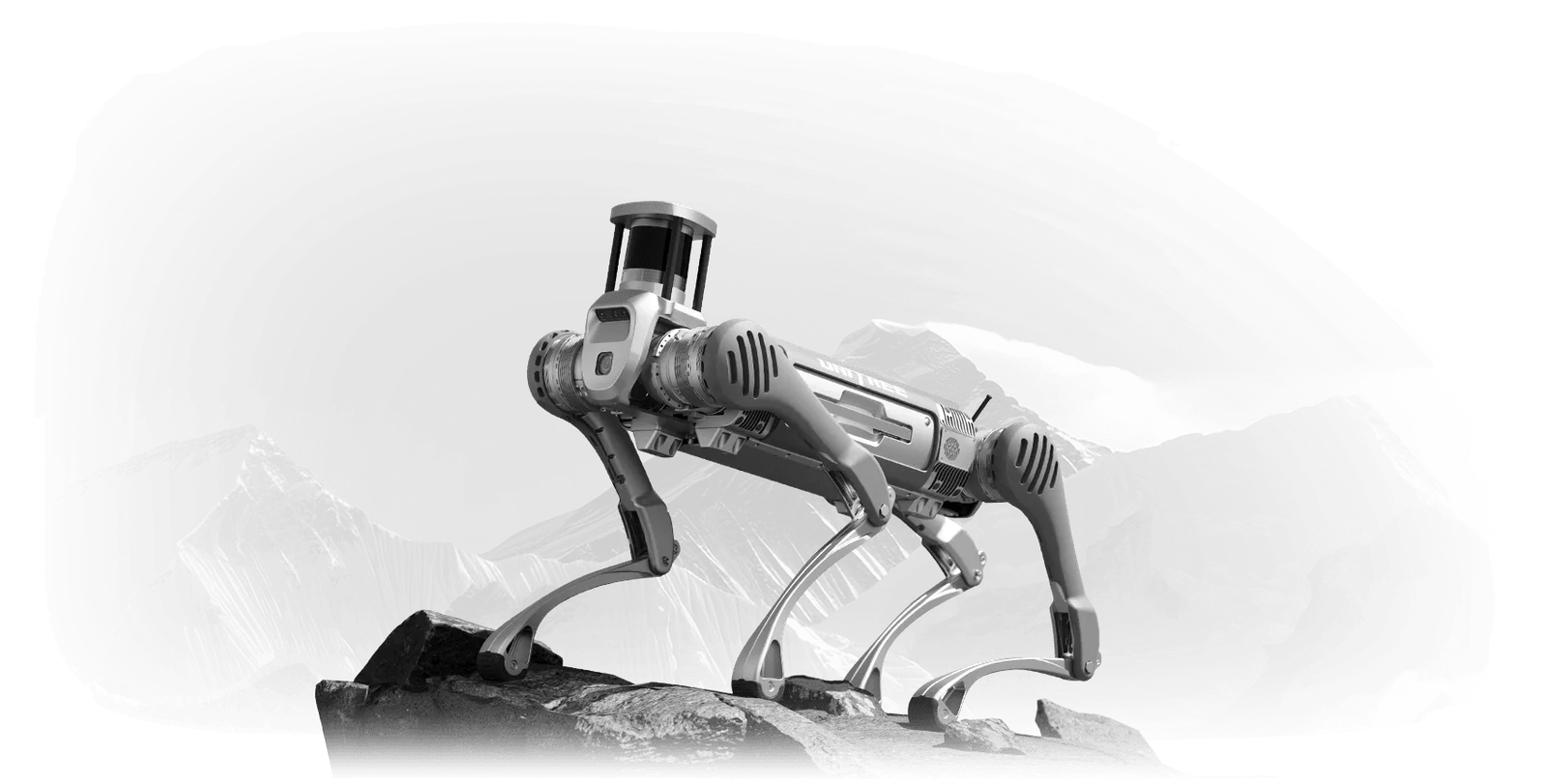
| Extreme environments | Inspection, security, energy | Quadruped inspection and patrol |
Hospitality and retail are the easiest places to begin, because the work is repetitive, the floors are mapped and the benefit is visible to guests. Our guides to robots in UAE hospitals and cleaning robots for malls go into the detail.
What does the programme mean for a company planning a robot pilot?
In practical terms, three things.
A supportive direction, not a purchase order
The programme sets direction and builds the environment: governance, regulation, labs and skills. It does not remove the need to justify a purchase. Treat it as a tailwind for approvals and partnerships, especially in government-linked organisations, and not as a substitute for a business case.
Regulation will keep developing
Legislation for robotics use is one of the five initiatives. Rules that apply to your site, such as those for public spaces, patrols or data from cameras and sensors, may change over time. Ask your supplier how a deployment is documented, and check current requirements with the relevant authority before you start. We do not give legal advice, and we avoid stating rules we cannot source.
Skills and support matter as much as hardware
The academic and adoption initiatives reflect a simple truth: robots need people who can operate and support them. When you compare suppliers, look at local training, spares and after-sales service. Our rollout playbook sets out what a sensible handover looks like.
What does a sensible first step look like?
Start small and measurable. A pilot on one floor, one corridor set or one delivery route teaches more than a long specification. Use this checklist before you commit:
- Name one task, such as night-time floor cleaning or tray delivery, and measure how long it takes today.
- Walk the route with your supplier and note lifts, doors, gradients and busy times.
- Confirm who in your team owns the robot day to day.
- Agree what success looks like after 30 to 60 days.
- Ask what training, support and spare parts are available in the UAE.
- Decide early whether leasing or buying fits better. Our leasing versus buying guide explains the trade-offs.
- Ask for a live demonstration in a space like yours before you order.
For floor care, a machine such as the Pudu CC1 is a typical starting point, and the wider Pudu range covers delivery, service and cleaning robots. Which model suits you depends on your floors and traffic, so we recommend a site walk first.
How does this connect to other UAE strategies?
The programme sits alongside wider national efforts in artificial intelligence and smart city development. Our posts on embodied AI and the UAE and on service robots in UAE government and smart city projects cover that wider picture. The common thread is that UAE policy is encouraging real deployments, with testing and adoption alongside research.
For a private business, that mostly means a more receptive environment: partners, regulators and customers who are used to seeing robots at work. It is a reason to evaluate robotics seriously, but the decision should still rest on your own numbers.
What should businesses avoid?
A few mistakes are common when a national programme creates excitement.
- Buying on headlines. The 200,000-robot target is a national figure and says nothing about whether a particular robot suits your site.
- Skipping the pilot. Real floors, real crowds and real lifts behave differently from a brochure.
- Ignoring support. A robot without local service and training becomes an idle asset quickly.
- Expecting people to be replaced. The practical gain is usually reclaimed hours and more consistent results, with staff moved to work that needs judgement.
Frequently asked questions
When was the Dubai Robotics and Automation Programme launched?
It was launched on 21 September 2022 by Sheikh Hamdan bin Mohammed, Crown Prince of Dubai, and is led by the Dubai Future Foundation. It is planned as a ten-year programme.
What are the main targets of the programme?
The stated targets are a 9% contribution to Dubai's GDP from robotics and automation within ten years, 200,000 robots over that period, and a place among the top 10 cities worldwide in the field. These come from the government announcement.
Does the programme offer funding or grants to businesses?
The published materials describe an adoption programme to help companies, but we have not seen specific funding terms we can cite. Check directly with the Dubai Future Foundation for current offers.
Which sectors does the programme focus on?
Production and manufacturing, consumer services and tourism, healthcare, connected mobility and logistics, and extreme environments. Hospitality, healthcare and logistics are where most commercial service robots are used today.
Where can I see service robots before I decide?
You can see robots from Pudu, Unitree and AgiBot at our DIFC showroom in Dubai. A live demonstration is the most reliable way to judge how a robot will behave in your space.
If you are planning a pilot, book a live demo at our DIFC showroom or contact us for a quotation.
See it in person.
The fastest way to decide is to watch the robot do your actual job. Book a live demo in Dubai, or tell us what you have in mind.


Ready when you are
Build your robot in the shop.
Choose persona, attire, colours and accessories. Preview live in 3D, then request a UAE quotation, all in the configurator.